Urban multi-family brick buildings in Over-the-Rhine and historic single-family wood frames in Northside present distinct structural challenges during bed bug remediation. The thermal protocol uses industrial mobile…
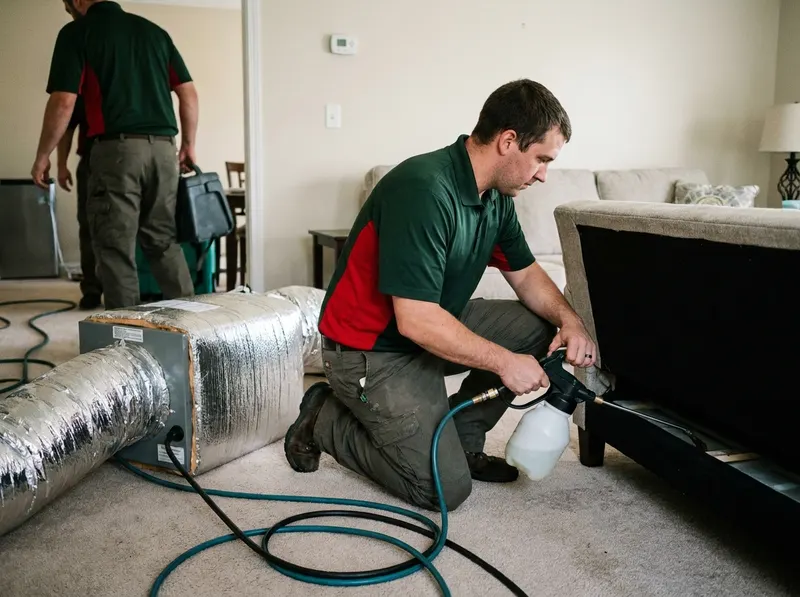
Urban multi-family brick buildings in Over-the-Rhine and historic single-family wood frames in Northside present distinct structural challenges during bed bug remediation. The thermal protocol uses industrial mobile heating units monitored by wireless internal thermistors to bring core room temperatures up to the lethal threshold of 122°F, as documented by the US EPA Bed Bug Guidance. Maintaining these temperatures for a continuous four-hour dwell period penetrates mattress seams, hollow headboards, and subflooring where early instars and eggs shelter. Convection fans rotate air volumes continuously to eliminate cold air pockets in plaster exterior walls common throughout Mount Lookout and Clifton properties.
While heat denatures insect proteins immediately without leaving chemical residues on bedding, it provides zero residual defense against insects re-entering from adjoining unit wall voids. Therefore, thermal heat alone is systematically paired with localized applications of CDC-referenced parasitic mitigation compounds. Technicians apply micro-encapsulated synthetic pyrethroids and amorphous silica gel along carpet tack strips, behind electrical faceplates, and inside wall cavities using specialized injection tips. Grounded data from the Purdue University Department of Entomology demonstrates that synthetic silica dusts mechanically strip the waxy epicuticle of the bug, inducing dehydration within 48 to 72 hours even against strains showing metabolic resistance to standard deltamethrin sprays.
Homeowners weighing standalone consumer canister foggers against professional dual protocols must consider the behavioral biology of the pest. Over-the-counter pyrethroid foggers cause localized agitation without sufficient downward penetration, driving gravid females deeper into baseboards and adjacent living rooms in Hyde Park or Oakley homes. In contrast, professional remediation coordinates non-chemical structural denial with targeted chemistry. Wire pass-throughs, baseboard gaps, and plumbing chases are sealed using elastomeric caulks and copper mesh based on standards aligned with the Pest Control Technology Technical Standards. Detailed building guidelines from the Cincinnati Health Department note that comprehensive physical preparation, such as laundering bed linens at 140°F and bagging non-heatable electronics, is mandatory before convective heating begins.
Targeted chemical barriers remain effective along perimeter thresholds for up to 90 days, neutralizing bed bugs emerging from deep wall cavities. Safety thresholds strictly follow ventilation parameters governed by the Occupational Safety and Health Administration to protect indoor air quality during post-treatment ventilation. Virello Pest Management technicians verify ambient cooling to beneath 85°F before homeowners return. For technical consultation or scheduling inquiries, call (513) 812-8088.
Every job gets a firm, written price after an on-site visit.
Tell us about your bed bug thermal and chemical treatment job in Cincinnati and we'll send a clear, written quote, usually the same day.
 Virello Pest Management