Subterranean termites, primarily eastern subterranean termites , live in subterranean colonies below the frost line and construct exploratory mud tubes over masonry to reach structural cellulose. Homes across…
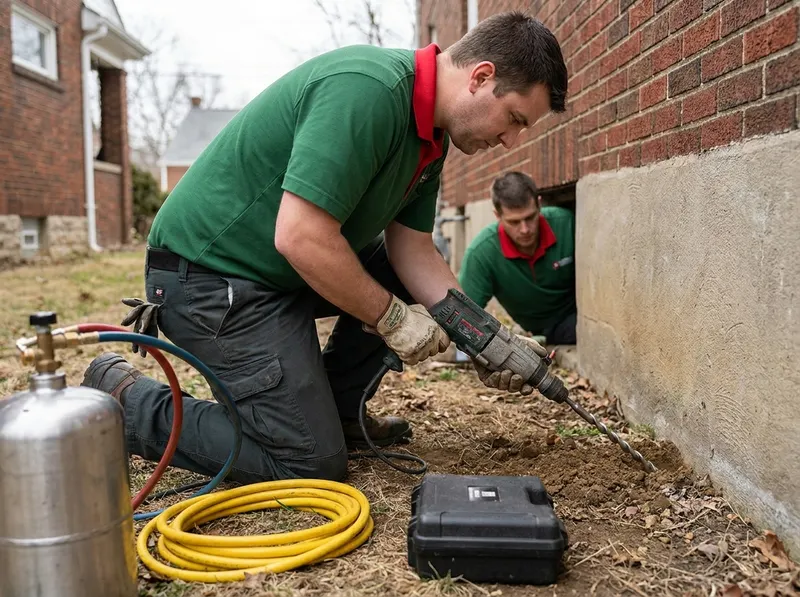
Subterranean termites, primarily eastern subterranean termites, live in subterranean colonies below the frost line and construct exploratory mud tubes over masonry to reach structural cellulose. Homes across Cincinnati encounter severe vulnerability due to historic building materials and fluctuating seasonal humidity. In older neighborhoods like Clifton and Over-the-Rhine, structural sills frequently interface directly with damp perimeter brick, whereas stone foundations throughout Mount Adams and College Hill develop mortar voids that allow concealed entry. Modern poured-concrete homes in Hyde Park and Mount Lookout remain equally susceptible through cold joints, expansion cracks, and perimeter utility penetrations. Remediation stops wood destruction, preventing sagging floor joists and costly frame replacements across Hamilton County properties.
Effective remediation avoids generic aerosol sprays, which only kill surface foragers and trigger reproductive budding within the main nest. Instead, systemic soil treatments create an uninterrupted liquid treatment zone along external footings using agents evaluated under EPA pesticide standards. When foraging workers pass through non-repellent formulations, they unknowingly transfer the active toxicant back to the subterranean queen via grooming, collapsing the central colony. For properties directly adjacent to sensitive waterways or dense urban parcels near Eden Park and Ault Park, low-impact monitoring and bait matrices provide an alternative, using insect growth regulators regulated under the Ohio Department of Agriculture to intercept underground foragers before they breach foundation perimeters.
The remediation process follows a clear operational sequence to guarantee complete structural defense:
Deciding between perimeter barrier trenching and exterior bait station deployment depends on foundation geometry and immediate structural damage. Liquid barriers provide fast suppression within 30 to 90 days, making them essential when termites actively chew supporting floor timbers; however, they require drilling interior utility slabs or finished basements. Dedicated bait systems avoid drilling historical stone masonry in Northside or Pleasant Ridge, though they require routine seasonal station monitoring to achieve total nest eradication. Technicians align treatments with construction protocols outlined by the U.S. Department of Housing and Urban Development and building safety criteria from the International Code Council. For guidance or inspection scheduling, contact Virello Pest Management at (513) 812-8088.
Every job gets a firm, written price after an on-site visit.
Tell us about your subterranean termite remediation job in Cincinnati and we'll send a clear, written quote, usually the same day.
 Virello Pest Management