Stinging insect and nest abatement addresses territorial aculeate hymenopterans nesting directly inside structural framing, overhangs, and landscaped yards. Aerial colonies like the Indiana Department of Natural…
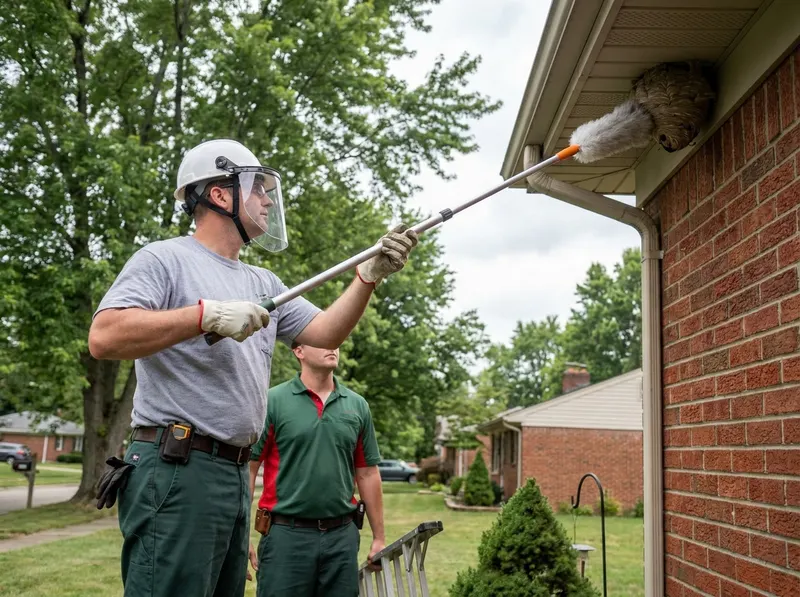
Stinging insect and nest abatement addresses territorial aculeate hymenopterans nesting directly inside structural framing, overhangs, and landscaped yards. Aerial colonies like the Indiana Department of Natural Resources Entomology Division identifies as bald-faced hornets routinely anchor to soffits, brick lintels, and gutter lines in older residential framing. In contrasts, subterranean yellowjacket queens take over abandoned rodent burrows along limestone foundations in hilly neighborhoods like Mount Adams, Clifton, and Mount Lookout. Over-the-counter aerosol sprays fail against established nests because chemical dispersal drops trigger systemic alarm pheromones, forcing wasps deeper into drywall crevices or living spaces rather than extinguishing the brood core. Virello Pest Management implements diagnostic exclusion to clear nests at the root without saturating attic air or exposing residents to airborne neurotoxins.
Technicians follow an integrated sequence that begins with thermal detection and ends with structural closure.
Structural design across Cincinnati dictates unique abatement protocols. Historic brick estates in Hyde Park and timber frames in Northside often feature unbaffled attic gable vents and decorative wood trim where paper wasps build open umbrella combs beneath cornices. Near humid green corridors like the Cincinnati Parks system, European hornets exploit rotted window headers and wall voids, actively stripping structural cellulose and chewing through drywall during warm autumn evenings. Virello Pest Management does not utilize blanket perimeter chemical applications. Instead, technician methods match standards from the National Pest Management Association, ensuring treatment hits target cavities cleanly without residual odors or secondary contamination.
Subterranean nesting creates invisible hazards along shaded lawns and stone retaining walls in College Hill, Oakley, and Pleasant Ridge. German yellowjackets establish root-line nests in spring that swell to over 4,000 workers by September, as measured by researchers documenting Ohio State University Extension insect biology. Ground-vibration disturbances from power lawnmowers frequently trigger mass stings. Safe abatement isolates subterranean tunnels using vacuum extraction and directional dust formulations regulated under the Ohio Department of Agriculture Pesticide Regulation, followed by mechanical backfilling with gravel and tamped soil to erase subterranean pathways.
Every job gets a firm, written price after an on-site visit.
Tell us about your stinging insect and nest abatement job in Cincinnati and we'll send a clear, written quote, usually the same day.
 Virello Pest Management