Residential parasite pressure in southwestern Ohio peaks due to humid river-valley microclimates and heavy suburban wildlife movement. In established communities like Hyde Park, Mount Lookout, and Clifton, mature tree…
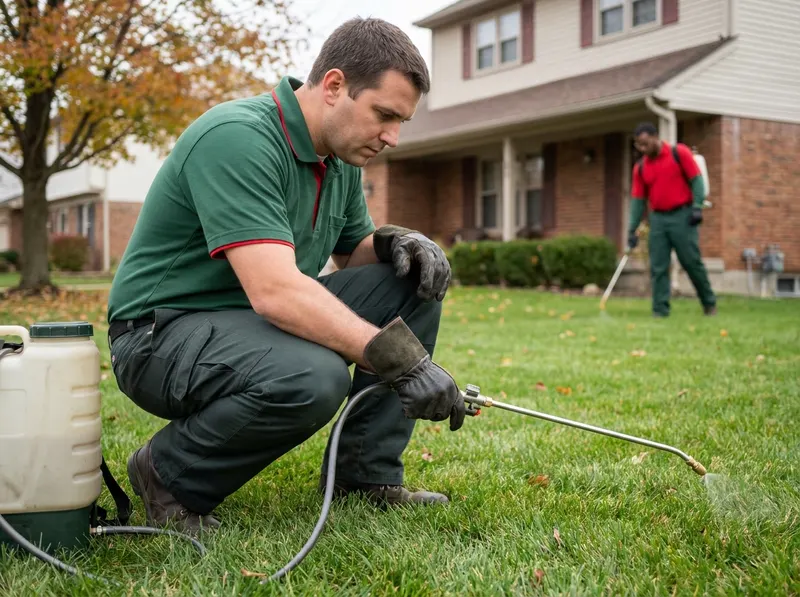
Residential parasite pressure in southwestern Ohio peaks due to humid river-valley microclimates and heavy suburban wildlife movement. In established communities like Hyde Park, Mount Lookout, and Clifton, mature tree canopies and extensive ground ivy retain damp leaf layers where tick nymphs and flea pupae survive standard temperature swings. According to the Ohio Department of Health, tick-borne pathogens including Lyme disease and spotted fever rickettsiosis continue to expand along regional vector corridors. Traditional off-the-shelf retail hose-end sprays wash away after single rainstorms, failing to reach the moist organic layer beneath Kentucky bluegrass or fine turf. Professional decontamination relies on broad-spectrum, micro-encapsulated residuals regulated under the United States Environmental Protection Agency that bind tightly to soil matter and foliage without creating persistent ambient odors or chemical runoff into storm systems.
Effective property containment requires treating specific ecological zones rather than uniformly drenching open, sunny turf. Ticks require ambient relative humidity above 80% to avoid desiccation, naturally congregating along woodland edges, ornamental boxwood plantings, and shaded brush boundaries common near Ault Park and Eden Park. Structural guidelines documented by the Centers for Disease Control and Prevention confirm that landscape transition strips drastically reduce outdoor human-parasite interactions. Virello Pest Management implements systematic physical and barrier suppression across the property lines:
Urban properties featuring compact exterior courtyards and zero-lot-line configurations, such as brick townhomes in Over-the-Rhine and Mount Adams, present distinct vector pathways compared to larger quarter-acre lots in College Hill, Oakley, or Pleasant Ridge. Urban flea and tick introductions frequently stem from urbanized feral hosts, alleyway rodents, and communal pet corridors. For these tightly partitioned yards, targeted vertical baseboard treatments and fence-line residual bands prevent re-infestation without saturating stone pavers or soil planters. Standard agricultural recommendations published by Ohio State University Extension demonstrate that pairing physical maintenance, such as managing turf height below three inches, with strategic applications yields lasting suppression. Safe application standards overseen by the Ohio Department of Agriculture ensure products dry within one to two hours, allowing pets and family members safe re-entry onto lawns without tracking residues indoors.
Homeowners selecting between spot-treating indoor pets versus executing complete exterior lawn decontamination face clear systemic trade-offs. Spot topical medications on pets eliminate parasites only after the vector attaches or enters indoor living spaces, allowing secondary tick nymphs and flea eggs to multiply unchecked across damp yard borders. Exterior turf decontamination eliminates the reproductive reservoir in the yard before vectors cling to companion animals or outdoor apparel. For verified property hygiene guidance, homeowners can consult regional health notices via the Hamilton County Public Health office. Structural pest integration aligned with the National Pest Management Association emphasizes mechanical moisture reduction, including proper grading and trimming back dense foliage, paired with residual ground applications. To coordinate an assessment for your property, call (513) 812-8088.
Every job gets a firm, written price after an on-site visit.
Tell us about your flea and tick lawn decontamination job in Cincinnati and we'll send a clear, written quote, usually the same day.
 Virello Pest Management